
Face Doctors

MINT Mono Thread Lift

Treatment

MINT Mono Thread Lift is the minimally Invasive Non-Surgical cosmetic treatment for Skin Tightening using PDO Threads.
​This treatment is suitable for anyone who has started to notice the signs of ageing, and in particular sagging tissues in their face and body.

MINT Mono Threads ​Non Surgical Face Lift

What are MINT Mono Threads?

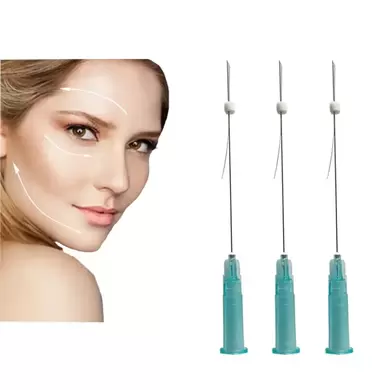
MINT Mono threads are smooth threads without barbs, that are used for skin tightening when lifting is not necessarily required. The threads are made of PDO suture material, which has been used in surgery to close wounds for decades. The MINT threads stimulate production of collagen, elastin and hyaluronic acid, wherever in the skin they are placed – this results in firmer rejuvenated skin. This treatment for non-surgical tightening is cutting edge and one of the most-recently approved technologies by the FDA

What is PDO?​

PDO (Polydioxanone) is a material often used in surgical sutures and is completely absorbable by the body. PDO threads dissolve around 6-9 months after insertion and create cellular renewal and collagen stimulation to maintain the lift for another 6-9 months. 

FAQ About PDO Threading

The threads are pre threaded on a fine needle which is inserted into the dermal layer of the skin. The needle is removed leaving the fine hair-like thread in the dermis. Multiple threads are placed into the area in a mesh like fashion which activates the production of collagen to gradually tighten and rejuvenate the skin. At the same time, MINT PDO threads cause the fat tissue to contract, producing a skin tightening effect. Over a period of around three months the threads fully dissolve leaving firmer more youthful looking skin.
 
  • Numbing anaesthetic cream is applied for 60 mins prior to your treatment
  • The MINT mono threads are pre-threaded onto a small needle
  • The introducer needle is inserted through the dermal layer of the skin
  • The needle is removed leaving the fine hair-like thread in the dermis
  • Once placed, the threads activate the production of collagen to gradually tighten and rejuvenate the skin
  • This action provides the skin with a tighter feel and appearance and more of a youthful look
  • Typically, around 10-30 threads are used to treat a single area
  • Neck lines and skin laxity
  • Face: nasolabial lines
  • Cheeks
  • Crows feet
  • Under the eyes
  • Lower face and jowls
  • Marionette lines
  • ​Around the mouth and peri-oral lines 
  • Décolletage
  • Body: sagging breasts, elbows, knees, upper arms, thighs, loose abdominal skin, buttocks

Immediate results can be seen once the threads have been inserted, however, the results will improve over the next 3-6 months. The PDO suture material on the MINT threads is gradually degraded and absorbed by your body over 6-9 months. The results are expected to last 12-24 months.

PDO threads themselves are considered safe, and the polydiaxonone threads we use are surgical grade and approved by the FDA. The threads used are the same as the absorbable surgical filaments used widely throughout the medical profession for decades, and they dissolve naturally on their own within 6-8 months. 
As with other similar treatments there are a number of possible side effects associated with PDO threads.
These side effects include but are not limited to:

  • Bruising: patients should anticipate bruising with this treatment
  • Redness for several hours following treatment.
  • Localized swelling can occur after the treatment; however, this should settle in 24 – 48 hours after the treatment.
  • Pain and discomfort:  throughout the procedure and patients may experience some discomfort for several days afterwards as the threads settle, especially if this procedure is close to a nerve ending.

From time to time there are some unexpected complications with this treatment, these include but are not limited to:
    • Nerve pain/neuralgia: Any time you are inserting an instrument or device beneath the skin (including surgery) there is a risk that you may brush past a nerve causing temporary irritation/aggravation of a nerve. This has a higher risk in certain areas of the face; your practitioner should discuss ‘at risk’ treatment areas with you during your consultation. Hypothetically there is a very remote risk of long-term pain.
    • Infection: It is rare for the skin to become infected after a procedure due to its rich blood supply. However, any time you break the skin barrier there is a risk of infection.

PDO post treatment advice

  • LED light treatment can be applied immediately after to reduce bruising.
  • Ice can be applied for a few hours post treatment to help reduce swelling and inflammation.
  • Paracetamol can be taken if required.
  • Avoid sudden movements, opening the mouth too widely, laughing vigorously or any other stimulation of the facial muscles over the next few days.
  • Sleep face up. Avoid sleeping on your side or face down for 2-3 days post procedure.
  • The area should not be massaged for the first month.
  • The treated area should be washed gently after 4-5 hours.
  • Avoid sauna sources of heat.
  • The use of any makeup on the treated areas should be avoided for the first 3 days.

Data Information

Please note this does not confirm your booking. We will get in touch with you to confirm your appointment time.
By submitting this form you will be signed up to the Face Doctors Clinic Newsletter. We respect your privacy and you can unsubscribe at anytime.

Please note we have allocated client parking, all unauthorized vehicles may be clamped or towed at owners expense. Clamping proceeds will be donated to monthly charity of our choice.